Strategy
Configuring the ranking and presentation of shipping options
A Strategy is a set of scenarios and rules that enable you to tailor how shipping options are presented to customers during the checkout process.
Strategy names must be unique within your organization. Other organizations can use the same name.
Depending on how you configure the strategy, it will determine the order, pricing, delivery time and presentation (e.g. badges, description) of the shipping options.
Delivery Time Display (Kustom/Klarna)
You can control how delivery time is rendered in Kustom by configuring the tactic and the node config:
Reference: Kustom shipping options delivery_time
Tactic Setting: deliveryTimeDisplayType
This setting determines how delivery time is displayed to customers:
-
interval: Sets delivery time as day intervals (e.g.2–5 days)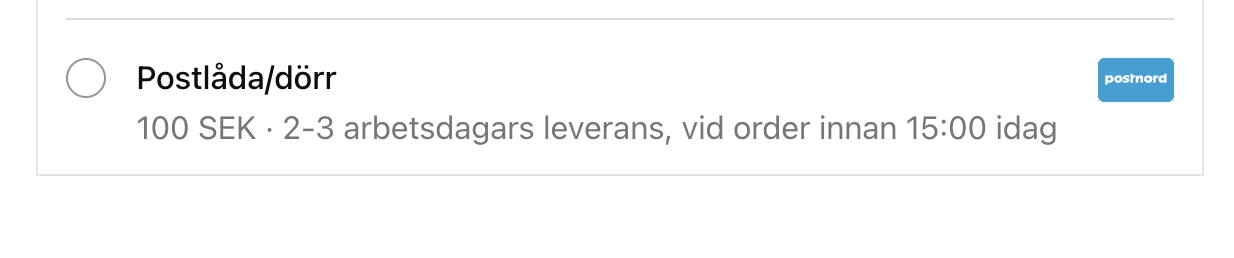
-
interval_latest: Sets only the latest day interval (e.g.within 5 days)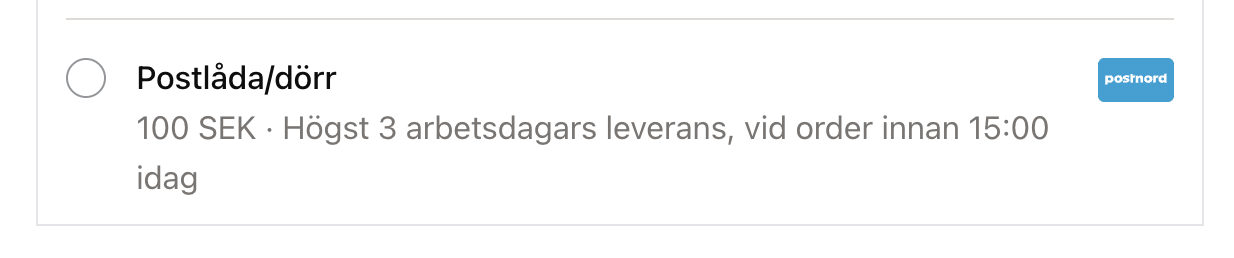
-
date: Sets specific delivery dates (earliest/latest)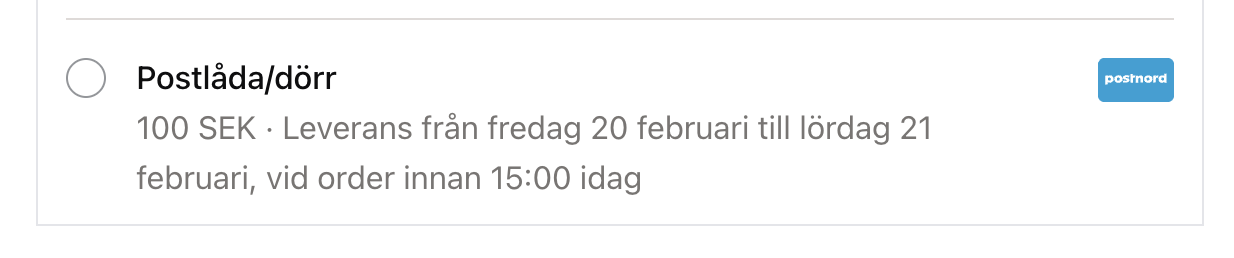
-
day_latest: Sets only the latest delivery date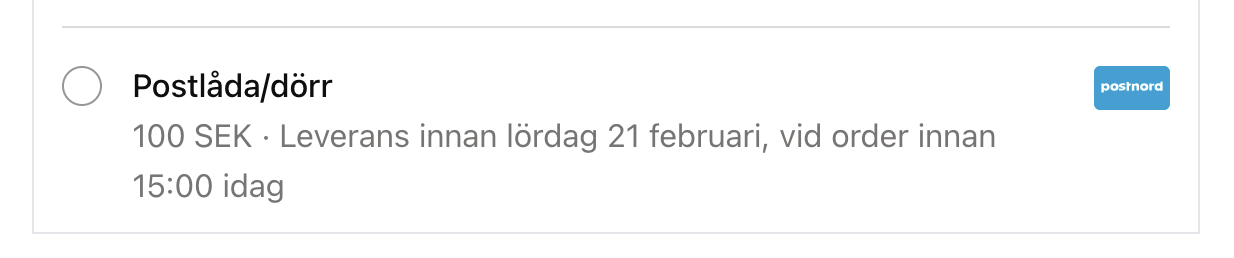
Node Configuration: Cutoff Time
Per transport method, you can configure:
cutoffTime: Sent asHH:MMand interpreted in the configured timezonecutoffTimeZone: The timezone for the cutoff time
Without Cutoff:
With Cutoff:
Cutoff and delivery estimates: The strategy cutoff is display-only and is sent to Kustom/Klarna for “ordered before X” messaging. Delivery estimates use the cutoff configured for the matching warehouse and transport method under Settings → Checkout → Warehouse handling times. Keep the strategy display time aligned with the warehouse setting when using both.
Global Overrides: Specific Delivery Dates
Inside a tactic's global overrides in Scope, you can override delivery promises in two ways:
- Use
earliestDeliveryTime/latestDeliveryTimeto set delivery as offsets in days. - Use
specificEarliestDate/specificLatestDateto pin the promise to exact dates.
Specific dates are useful for scenarios like pre-orders or launches where the delivery promise should not move relative to the order date. In Scope, these two modes are mutually exclusive, so you cannot configure both at the same time. If a strategy is authored outside Scope and both modes are present, the specific dates take precedence.
Anatomy of a Strategy
A Strategy works like a decision tree, where each branch represents a set of conditions that must be met for the branch to be applied. When a cart is applied to a strategy, the tree is evaluated and will result in one tactic being applied.
This design is flexible and easy to overview - even for the most complex scenarios.
| Term | Description |
|---|---|
| Strategy | A complete "logic tree" consisting of multiple Tactic Branches and Tactics. |
| Tactic Branch | A grouping of tactics to be applied under certain conditions. Example: Collection of rules you want to apply for orders to be shipped to Germany. |
| Tactic | Contains the logic determining the output of the strategy. Applying a strategy always results in one Tactic. |
| Condition | Set of logical evaluations that will be either true or false, determining which path of the Strategy will be applied. Example: Destination country is Germany. |
Now that you understand the basics, you are ready to create your first Strategy.